Fee language
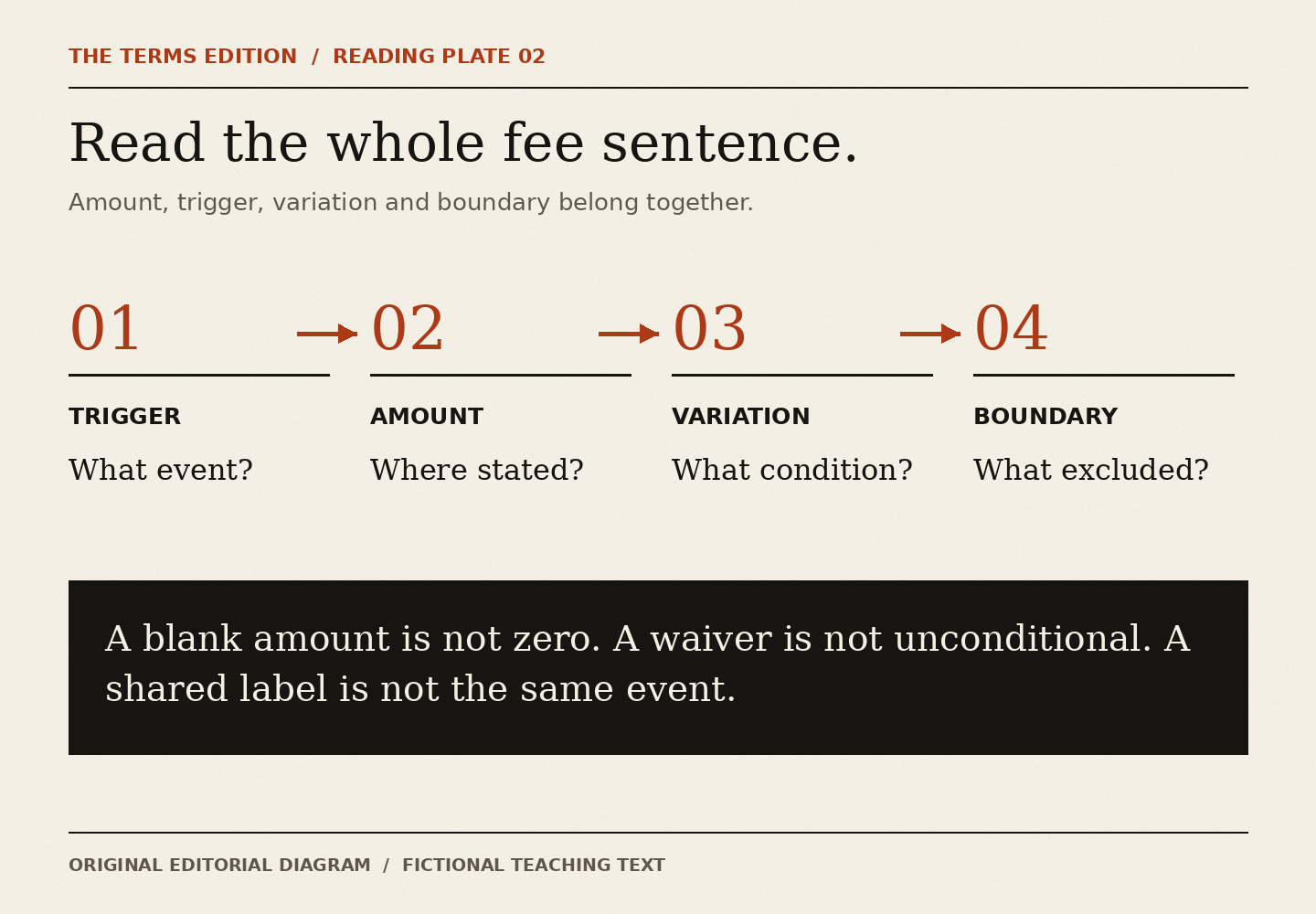
A Fee Is a Sentence, Not Just a Number
Keep the event, amount, waiver conditions and exclusions attached before comparing a fee statement.
Clearer reading. More precise questions.
DOCUMENTS / CONDITIONS / CONTEXTTHE BIG READ / DOCUMENT LITERACY
A clearer way to read the words around a prepaid-card feature.
INDEPENDENT EDITION · OCTOBER 2026
Begin with the document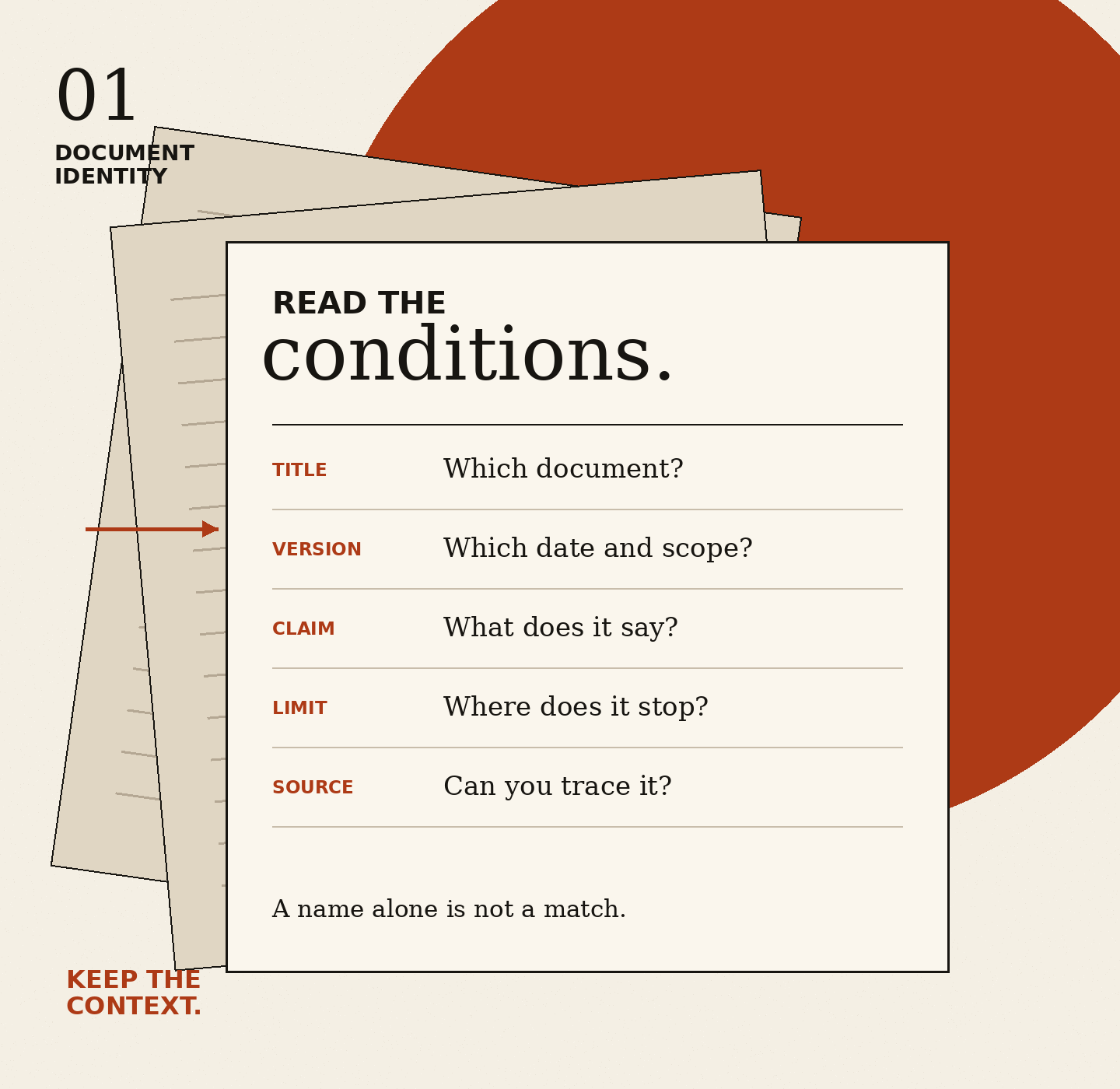
Fee language
Keep the event, amount, waiver conditions and exclusions attached before comparing a fee statement.
Version reading
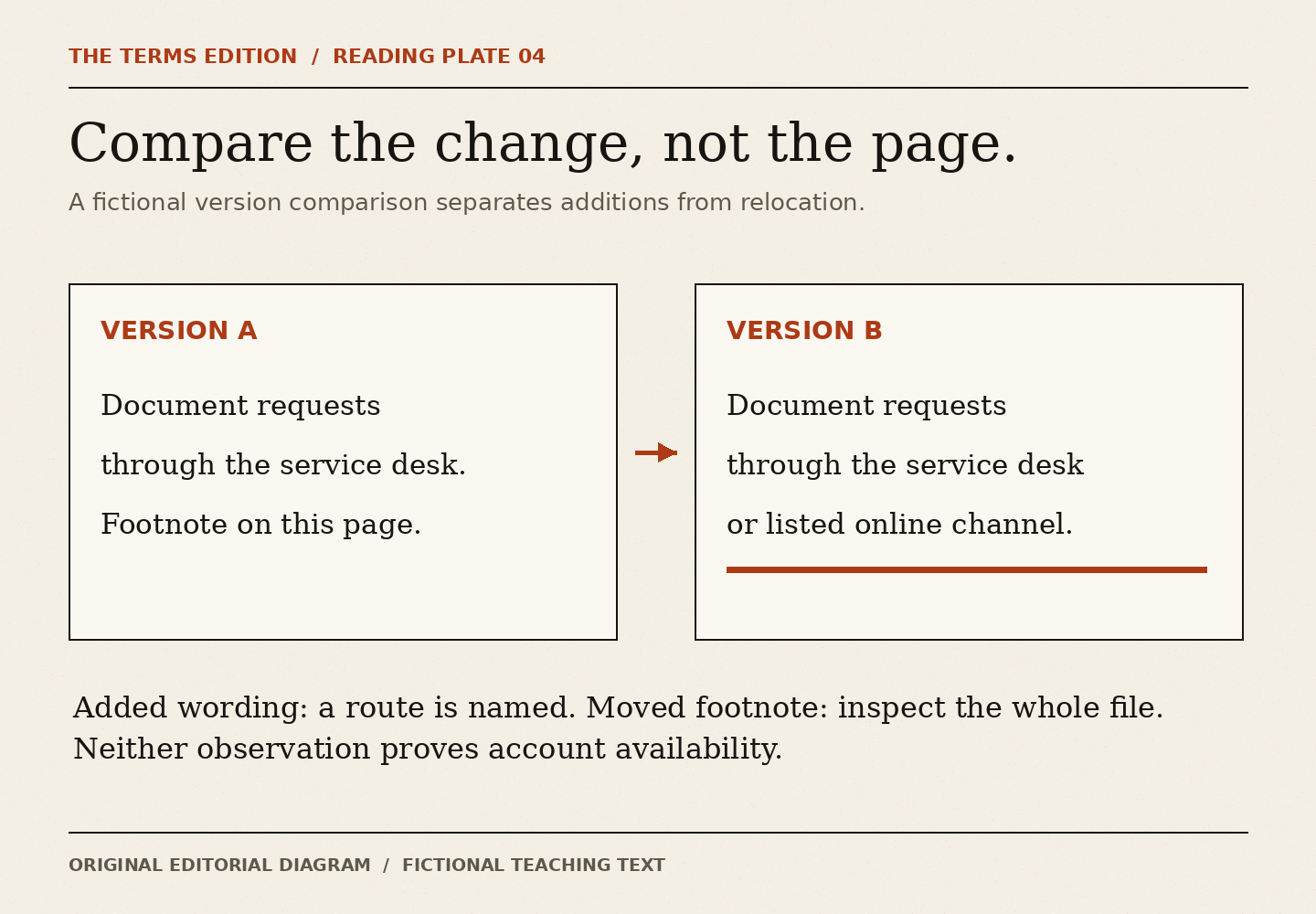
Separate added wording, moved passages and uncertain relationships in a comparison that another reader can retrace.
Reference trails
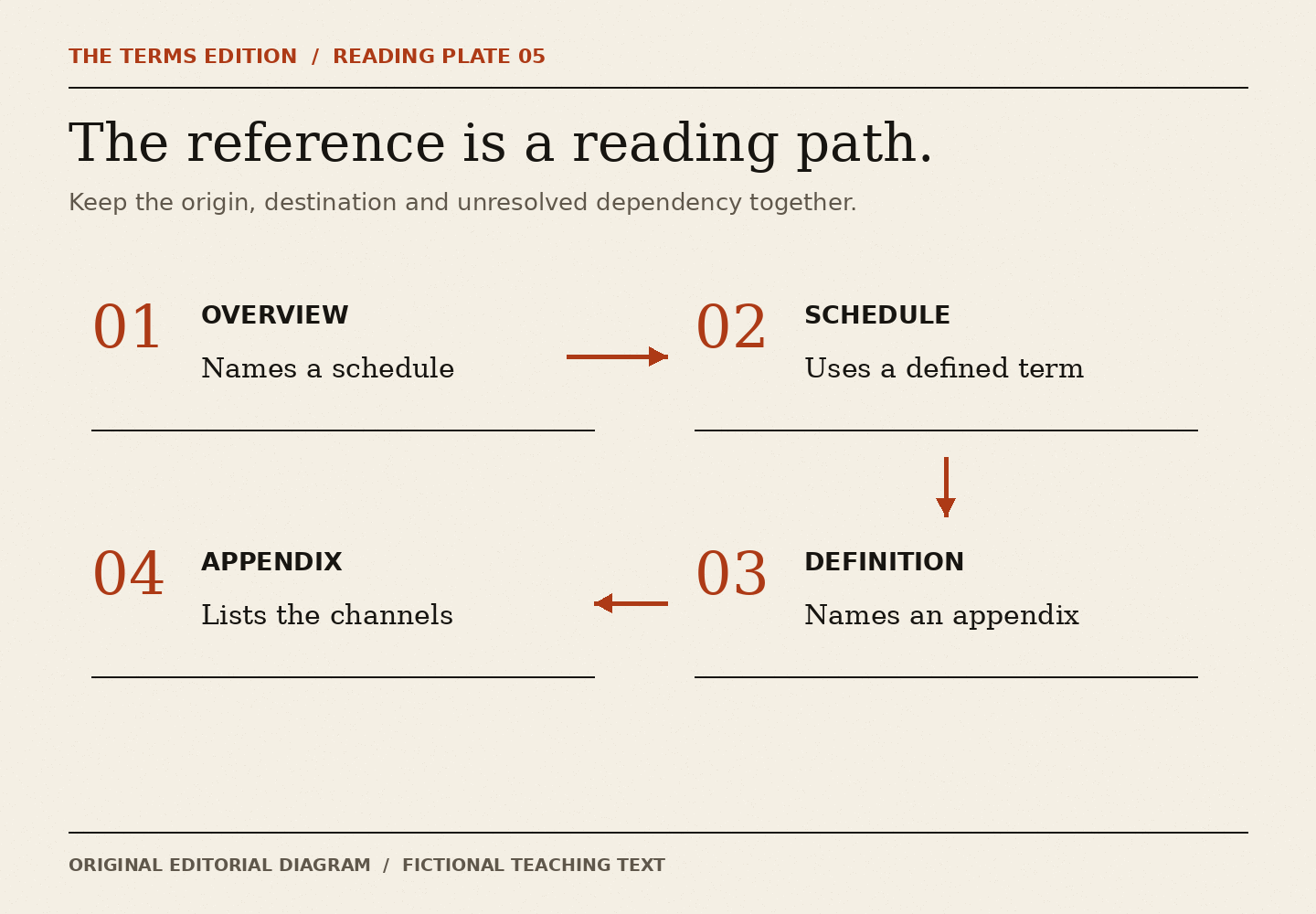
Track the origin and destination of a reference, including the moment the trail crosses into another document.
THE MARGIN DESK / BROWSER-LOCAL READING AID
Mark what you have located while reading a document. The result preserves gaps and next questions. It is a self-reported completeness map, not a score, document analysis, product recommendation or legal assessment.
Choose reading states, then build the map. No document is uploaded or inspected.
No document text, names, dates, amounts, accounts or credentials are requested. There are no uploads or free-text fields. The map sends and saves nothing; choices stay in current page memory. Your browser may independently restore form state.
Fictional example: a reader has identified a teaching document and its fee event. The amount context and exclusions remain unclear. The source is traceable, and the reader has written a question privately. No actual agreement is represented.
For a non-fee reading question, mark both fee categories outside scope. Every category being recorded still does not prove that a document is complete or a feature suitable. Use actual official materials for the relevant program.
THE READING ROOM
Twelve essays. Twelve distinct ways
to keep a claim in context.
12 articles
Document identity
Before reading a promise, establish which document you have, what it describes and which identity questions remain open.
Read the article : Start With the Document, Not the PromiseFee language
Keep the event, amount, waiver conditions and exclusions attached before comparing a fee statement.
Read the article : A Fee Is a Sentence, Not Just a NumberConditional wording
If, after, only, unless and may carry relationships a short summary can easily erase.
Read the article : The Small Words That Carry the ConditionsScope & exclusions
An exclusion marks the edge of a claim. Learn what it narrows without making the boundary broader than the text.
Read the article : Read the Edge of the OfferDefined terms
Use a substitution test to discover when a familiar word has a document-specific meaning.
Read the article : When an Ordinary Word Has a Special MeaningVersion reading
Separate added wording, moved passages and uncertain relationships in a comparison that another reader can retrace.
Read the article : Two Versions, One Careful ComparisonReference trails
Track the origin and destination of a reference, including the moment the trail crosses into another document.
Read the article : Follow the Footnote All the Way HomeChannel comparison
Compare the action and object before assuming two descriptions offer equivalent routes.
Read the article : Same Feature Name, Different ChannelSource purpose
Move from a broad product message to a specific condition without skipping the evidence in between.
Read the article : A Headline and an Agreement Do Different WorkReading gaps
Name the shape of a reading gap and preserve an unknown instead of filling it with an assumption.
Read the article : “Not Found” Is a Finding With LimitsSource provenance
Keep document identity, exact location and your own interpretation from collapsing into one untraceable sentence.
Read the article : Keep the Trail Behind the TextBetter questions
Use a source locator, an unclear phrase and a missing relationship to build a question that can actually close.
Read the article : Turn a Dense Paragraph Into One Answerable QuestionRead slowly where the meaning changes.
About this independent edition ↗